Dragon Ball Z Trading Cards: Market Analysis
Richard WeissDragon Ball Z (DBZ) trading cards have evolved from a niche 1990s collectible to a burgeoning alternative investment class. Both vintage DBZ cards from the early 2000s and modern releases (like the Dragon Ball Super Card Game) are seeing increased collector interest as the franchise continues to capture new generations of fans.
In this detailed analysis, we examine their long-term value potential, highlight key value drivers, and identify the best sets for collecting and reselling. We also explore how rarity, professional grading, and market trends—including the 2024 launch of Fusion World—influence prices.
Whether you are a new collector or a seasoned investor, explore our full collection of TCG and Dragon Ball cards to start your journey.
Vintage DBZ Card Sets (1980s–2000s): Nostalgia & Rarity
Vintage DBZ cards carry strong nostalgia and often have relatively low print runs, which can translate to significant value appreciation over time. Key vintage categories include early Japanese card sets (Bandai’s Carddass from the late 1980s) and the Score Entertainment DBZ Collectible Card Game (CCG) launched in 2000.
Score’s DBZ CCG ran through the early 2000s (covering the Saiyan Saga through Kid Buu Saga) and introduced ultra-rare chase cards that are highly sought after today.
The Value Drivers of Vintage
- Limited Print Runs: Early DBZ cards were produced in much smaller quantities compared to mainstream TCGs like Pokémon or Magic: The Gathering. Score’s Ultra Rare (UR) inserts were notoriously hard to pull (often ~1 per booster case). Fewer of these cards exist, especially in top condition, making them population-wise rarer than many vintage Pokémon holos.
- Nostalgic Demand: Collectors who grew up watching Goku go Super Saiyan on Toonami are now adults with disposable income. This demographic shift is fueling demand for the specific cards they chased as kids.
Top Vintage Sets & Cards
Several vintage releases stand out as investment-worthy due to their significance and scarcity:
- 2000 Score Saiyan Saga: The inaugural DBZ CCG set. While it contained no ultra-rare cards, sealed Saiyan Saga product is increasingly scarce. Early set nostalgia and being "#1 of the series" gives it long-term collector value.
- 2000 Score Frieza Saga: Introduced the first Ultra Rare (UR) card: Super Saiyan Goku (Level 4). Limited 1st Edition foils of this card in top shape are considered "holy grails" for DBZ CCG fans.
- 2001–2003 Android/Cell/Buu Sagas: Later Z-era sets included powerful UR personalities like Goku, The All-Powerful and Goku Super Saiyan 3. By the final Buu Saga (2003), distribution was more limited, making those URs especially rare. For instance, the Buu Saga Goku Super Saiyan 3 (Level 5) UR fetched $5,200 in a raw (ungraded) sale in August 2023.
Pro Tip: Sealed vintage boxes are becoming distinct asset classes. As packs get opened, the remaining supply dwindles, naturally driving up the price of sealed product.
Modern DBZ Cards (2010s–Present): New Rarities & Recent Hype
The modern era is dominated by Bandai’s Dragon Ball Super Card Game (DBSCG). Launched in 2017, this game introduced stunning new card designs, Secret Rares (SCR), and other special rarities that ignited a collector market rivaling major sports cards.
Key Modern Sets & Trends
- Tournament of Power (2018): A pivotal expansion that yielded the hobby's most legendary card: Son Goku, The Awakened Power (SCR). This card had a low pull rate and a game-breaking "Victory Strike" ability. It has sold for $12,100 in a BGS 10 grade, and an ultra-rare BGS Black Label 10 copy famously traded privately for a staggering $90,000.
- Universal Onslaught (2020): Introduced the Son Goku & Vegeta, Apex of Power (SCR). During the 2020 boom, pristine copies of this card hit over $10,000 at auction.
- Realm of the Gods (2022): This set introduced the "God Rare" (GDR), a rarity tier significantly scarcer than Secret Rares. The SSB Vegeta, Unbridled Power GDR instantly became a status symbol, selling for over $2,000 raw and nearly $10,000 in pristine grades.
Fusion World (2024): The New Era
In 2024, Bandai launched Dragon Ball Super Card Game Fusion World, a new simplified version of the game designed to compete directly with One Piece and Pokémon. This digital-physical hybrid game has reignited interest in the hobby, with "Alternative Art" (Alt-Art) Leader cards fetching high prices.
Collectors should pay close attention to the Awakened Pulse and Blazing Aura sets, as these are the foundational releases for this new system. The shift to a digital client has brought in a wave of new players who may eventually cross over into collecting the physical cards.
Grading: The Value Multiplier
Professional grading (by PSA, BGS, or CGC) plays a massive role in the DBZ market. Because many cards have low populations in top grades, achieving a Gem Mint 10 can multiply a card’s value exponentially.
Vintage Condition Challenges
Early Score cards were often played with rubber bands or stored in pockets. Finding a vintage Ultra Rare in PSA 10 condition is incredibly difficult. As of 2020, only 3 PSA 10 Score Z cards were known to exist. This extreme scarcity means a Gem Mint vintage card can command a huge premium over a "Near Mint" raw copy.
Modern Premiums
For modern cards, the difference between a PSA 10 and a "Black Label" BGS 10 (perfect subgrades) can be the difference between a $500 card and a $5,000 card. High grades essentially amplify scarcity: there might be thousands of raw copies, but if only a dozen have graded a perfect 10, those dozen become the investment-grade assets.
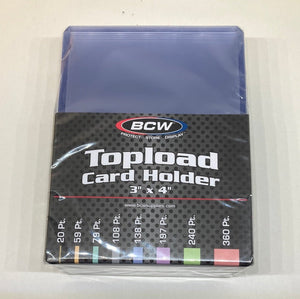
Protect Your Investment: If you are holding raw cards for future grading, always ensure they are stored in premium penny sleeves and top loaders to prevent surface scratches.
Market Trends & Price Trajectory
The DBZ card market has experienced significant swings, influenced by broader collectible trends and the 2020 "pandemic boom."
- The 2020 Boom: Fueled by stimulus money and nostalgia, prices for sealed boxes and singles exploded. Cards that were once $50 were suddenly selling for $1,000.
- The Correction (2021-2022): As the initial hype cooled, prices settled. While some "FOMO" buyers lost money, the correction created a healthier entry point for long-term collectors.
- Stabilization (2023-Present): The market has matured. The introduction of God Rares and Ghost Rares has kept high-end interest alive, while auction houses like Goldin and PWCC now regularly feature Dragon Ball cards, validating them as a serious asset class.
Risks and Considerations
No investment is without risk, and trading cards are a speculative asset class. When it comes to DBZ cards, here are some important considerations:
- Volatility: The DBZ market is smaller than Pokémon, meaning it can be more volatile. Prices can swing quickly based on new set releases or shifts in meta viability.
- Liquidity: Finding a buyer for a $10,000 Dragon Ball card may take longer than selling a Michael Jordan rookie or a Charizard. The pool of high-end buyers is smaller.
- Reprints: Bandai occasionally reprints sets, which can temporarily lower prices of non-serial numbered cards. However, 1st Edition prints generally hold their value best.
- Game Health: The long-term value of modern cards is often tied to the health of the game. The transition to Fusion World is a critical moment to watch—if the new game succeeds, it could lift the entire franchise; if it fractures the player base, it could hurt demand for older "Masters" sets.
Conclusion: Is DBZ a Good Investment?
Dragon Ball Z trading cards have proven to be more than just nostalgic collectibles—they are an investment arena with notable potential. Vintage cards offer the safety of scarcity and nostalgia, while modern cards provide the "lottery ticket" thrill of pulling a God Rare.
For those looking to invest, the best strategy is to target the proven winners: Iconic Characters (Goku, Vegeta), Highest Rarity Tiers (UR, SCR, GDR), and High-Grade Slabs. By focusing on rarity, condition, and cultural significance, collectors can build a collection that stands the test of time.
Be sure to check our Trading Cards collection frequently for new arrivals of sealed product and graded singles to add to your portfolio.
Disclaimer: Nothing here is financial advice. Always do your own due diligence and consult professionals regarding any investment decisions.
Shop the Setup
Gear from this article — custom-printed and shipped in 2–4 business days.